Super Simple 日本語 on YouTube: Gentle, Easygoing Kids' Songs (and How to Watch Safely)
FamilyTube channel guide #10
Picking up toys is a daily tug-of-war in a lot of homes. You say "clean up" three times, and your kid is still sitting in the middle of the blocks. But swap in a song, and sometimes they'll start tossing things back in the bin while they sing. The problem is that most kids' song videos are loud and fast, and by the end, kids are more wound up than when they started. If you want carefully made songs with a gentle pace, the kind that help kids settle down, Super Simple 日本語 - 童謡とこどもの歌 (Super Simple Japanese – Nursery Rhymes and Kids' Songs) is well worth getting to know.
This is the Japanese channel of the kids' music brand Super Simple. It features Japanese versions of the brand's own こどものうた (kids' songs), along with seasonal songs and compilations. Compared with the lively sing-and-dance channels, it has the gentlest pace of any channel we've looked at. For parents who want to carve out a little slow-down time in the day (including me, a dad of twins), it's a really handy channel, as long as you're still willing to pick videos one at a time.
- Official channel: youtube.com/@supersimplejapanese (about 1.65 million subscribers and 469 videos as of October 2026)
- Latest upload: October 6, 2026 (the channel is still updating)
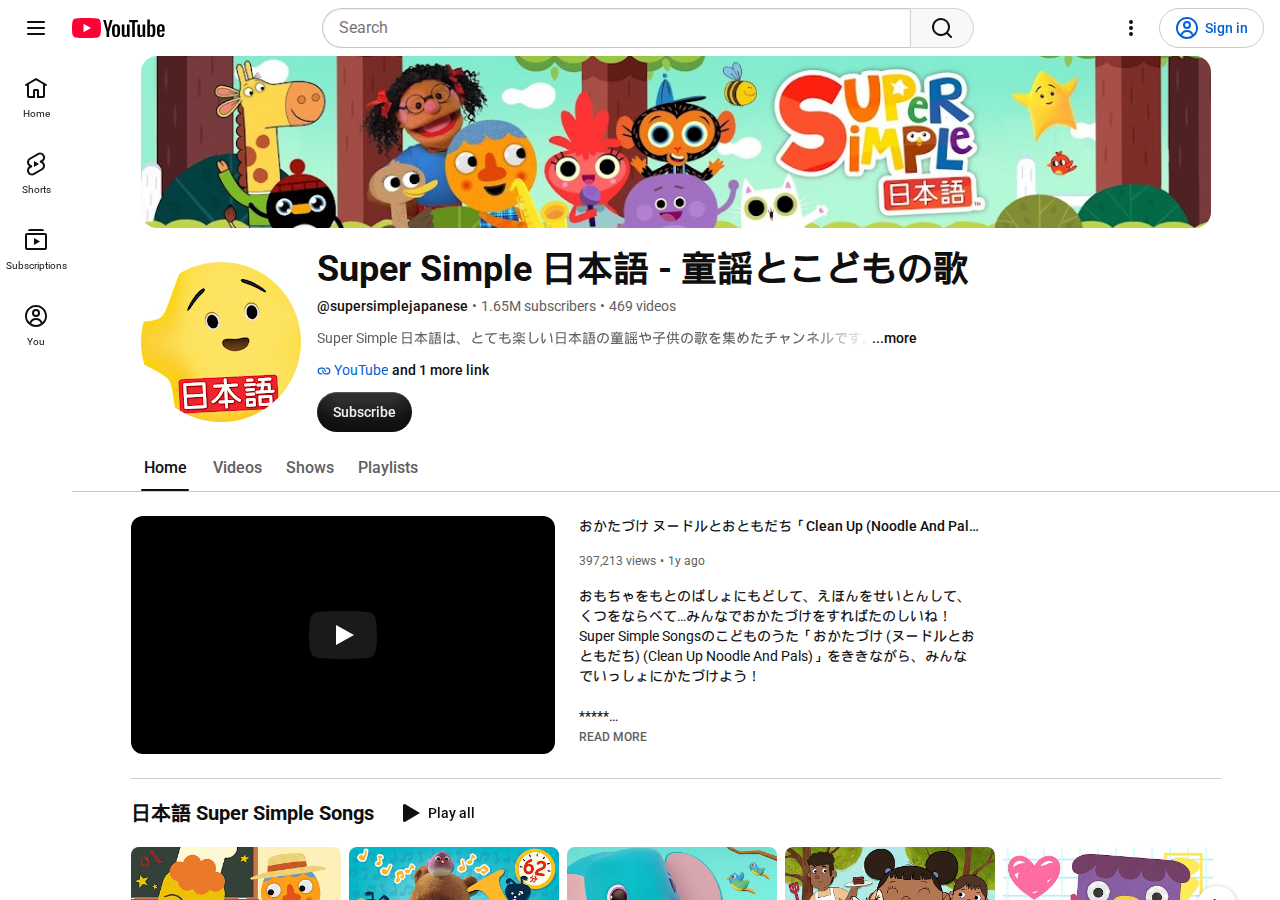
What is Super Simple 日本語?
Super Simple is a brand that makes songs for young children, and Super Simple 日本語 is its Japanese channel. The full name is "Super Simple 日本語 - 童謡とこどもの歌." Many of the songs are Japanese versions of Super Simple's existing songs, so video titles often give the Japanese song name followed by the original title, like おかたづけ「Clean Up」 and ゾウのあかちゃん「Baby Elephant」.
That's also the biggest difference from ボンボンアカデミー (Bom Bom Academy). ボンボンアカデミー collects traditional Japanese 童謡 (dōyō, nursery songs) and 手あそび (te-asobi, hand-play songs), while Super Simple 日本語 mostly features the brand's own kids' songs, with fewer traditional nursery songs. That said, the channel does have songs marked にほんごのうた (Japanese songs), like むしのこえ (The Voices of the Insects), so you can find both kinds.
As of October 2026, the channel had 469 videos, with the latest upload on October 6, 2026, and it's still updating. Besides single songs, there are seasonal songs for holidays like Halloween, plus some longer compilations. It's not a huge library, but lengths and topics still vary, so this is another channel for picking and choosing rather than adding all at once.
Age note: The channel description doesn't list an age range. My own take is that it works best for about ages 2 to 6, and younger kids can listen along with a grown-up.
Why parents love it
1. A gentle pace that doesn't rev kids up
Of all the channels we've looked at, this one has the gentlest pace. It's great for times when kids need to settle down, like picking up toys, getting ready for a bath, or coming in from playing outside before dinner.
2. The song is the task: when it's over, the job's done
With a song like おかたづけ, the title is literally the thing to do. By the time the song ends, the toys are mostly put away, so screen time leads straight into real life instead of just ending.
3. Made by a brand, with consistent quality
Super Simple specializes in songs for young kids, and the Japanese versions we sampled were consistently well made. Compared with the endless copycat song animations online, it's one less thing for parents to worry about when picking videos.
4. A nice complement to the lively sing-and-dance channels
When kids need to burn off energy, put on ボンボンアカデミー or ケロポンズ&プッピーズ (Keropons & Puppies). When it's time to slow down, switch to Super Simple 日本語. Picking songs to match the time of day beats having the same kind of energy on all day.
My take as a twin dad
おかたづけ is perfect for toy pickup time: just one song, and you sing while you clean up. The way I see it, the song is there to help with cleaning up, not to replace it. Once the toys are put away and the song is over, that bit of screen time is done. No need to put on another one.
My advice is to tie each song to a specific moment in your day. Pickup time gets おかたづけ, quiet time gets ゾウのあかちゃん, and on fall evenings you can try むしのこえ. When kids know "this song means it's time to do this," it's a lot easier than reminding them over and over.
To be honest, even on a gentle channel, not every video is equally gentle. The seasonal songs and compilations vary in pace and length, so I still think of it as "kids' songs a parent picked," not "a channel kids scroll through by themselves."
The catch: great show ≠ safe YouTube
Even a brand's official channel runs into the same problems once it's on YouTube: suggested videos in the sidebar, autoplay, and the comments section. Your child finishes putting the blocks away to おかたづけ, and the next thing YouTube recommends might be a long compilation that plays on and on, or some other kids' channel you've never even seen. What was supposed to be one cleanup song can easily turn into another long stretch of screen time.
That's the gap FamilyTube is built for:
Kids only watch parent-approved YouTube videos.
No recommendation feed. No endless scrolling. No surprise next video.
You keep Super Simple 日本語's gentle songs. You drop the algorithm.
Where to start: your first week
Step 1 — Start with the cleanup song
For the first one, I'd go with おかたづけ「Clean Up」| こどものうた | Super Simple 日本語. You don't need to set aside time to watch it. Just play it when it's time to pick up toys, and let your child clean up while listening. The first time, pitch in yourself so your child learns what to do when this song comes on. If they just listen at first and don't help, there's no rush. Show them a few times, and let them slowly connect the song with cleaning up.

Step 2 — Add a quiet song and a seasonal one
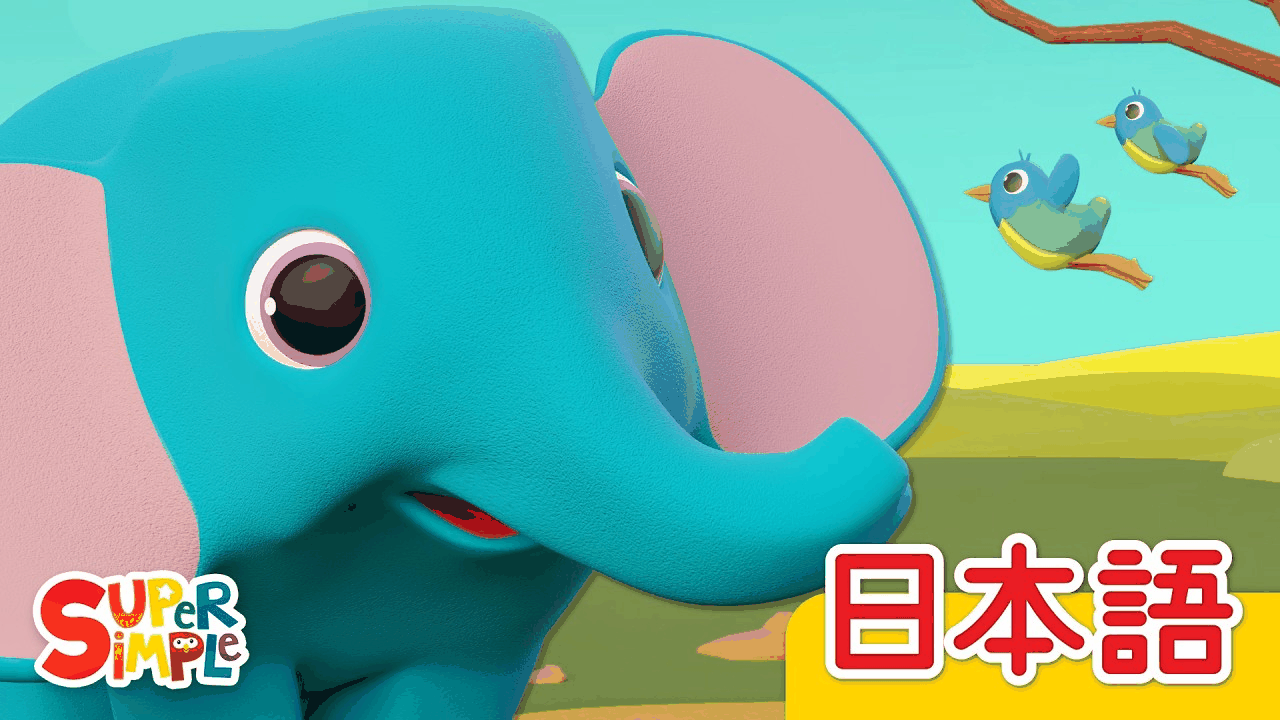
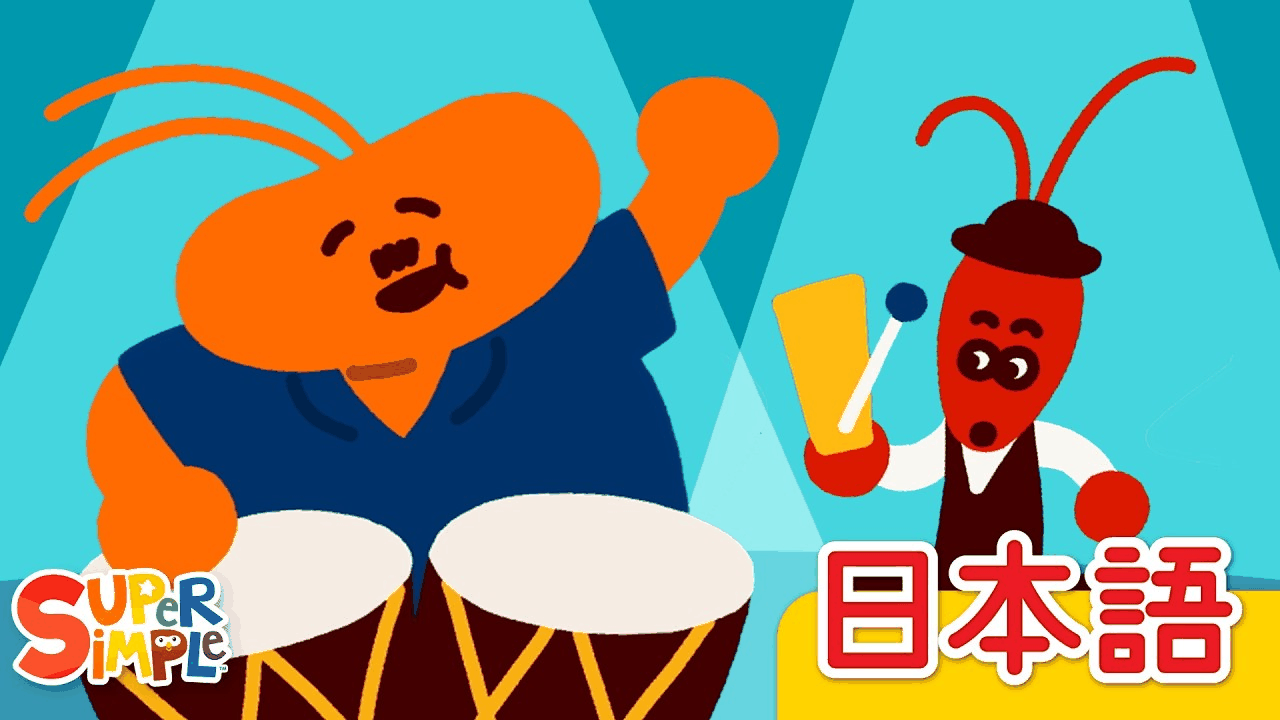
Once the cleanup song is working, add ゾウのあかちゃん「Baby Elephant」| こどものうた | Super Simple 日本語, a song about a baby elephant. It's a great fit for slow-down times like before bed or before a bath, but you might want to listen once yourself first to see if it fits. After that, try むしのこえ「Mushi No Koe」| Kids Songs | にほんごのうた | Super Simple 日本語. After listening on a fall evening, you can step out onto the balcony or head to the park together and listen for real insects chirping. Add just one at a time, and wait a few days before adding the next.
Step 3 — Preview seasonal songs and compilations first
Seasonal songs for Halloween, Christmas and the like may have a different mood and pace from the everyday songs, so I'd watch them yourself before deciding whether to add them. The same goes for compilations marked ベスト (Best) or メドレー (Medley). Once they start, they go on for a long time, so they're better for occasions when you've watched them ahead of time and know you have the time that day.
For everyday settle-down moments, a single song is still the easiest to manage. The song ends, the job's done, and the screen goes off.
Step 4 — A quick chat after the song
One song plus a sentence or two of chat is just right. Ask "What did the song say to put away?" or "Who was that song about?" Or next time you pick up toys, skip the video and try humming a bit of it first. It doesn't need to be a big conversation. The point is letting the song follow your child into everyday life.
How to watch Super Simple 日本語 safely in FamilyTube
- Open FamilyTube on your iPhone or iPad and go to the Parent Area.
- First, check Recommend to see if Super Simple 日本語 is there. If it isn't, tap Search at the bottom, switch to the Search channels tab, and type the channel name, Super Simple 日本語.
- Once you open the channel, you can see every video on the Videos tab, or switch to Playlists to browse by topic.
- Tap + next to a video to add it, or open a playlist and check the videos you want. Start with one starter video, like おかたづけ, and add more over time.
- Turn on Child Mode and hand over the device: your child can only tap videos you approved.
Result: your child can listen to a gentle song while picking up toys or getting ready for a bath, and every video they see is one you picked.
Download FamilyTube on the App Store
Search the App Store for FamilyTube.
Quick FAQ
Is Super Simple 日本語 free on YouTube?
Videos on the official channel are generally free to watch, though availability may vary by region.
Does the channel have traditional Japanese nursery songs?
Yes, but not many. The channel focuses on Super Simple's own kids' songs. If you're looking for the traditional nursery songs and hand-play songs kids sing at preschool, ボンボンアカデミー has a much fuller collection.
Can I add the seasonal songs right away?
I'd preview them first. Seasonal songs for Halloween, Christmas and so on feel different from the everyday songs. If you watch one and it seems like a good fit, add just one or two during that season.
Can I add the whole channel at once?
I wouldn't. The channel has 469 videos, including seasonal songs and long compilations. Starting with three everyday songs and keeping your approved list short is much easier to manage than adding everything at once.
Does FamilyTube replace YouTube?
No. FamilyTube plays the YouTube videos you choose. It just keeps YouTube's recommendations and that never-ending "next video" off your child's side of the screen.
Bottom line
Super Simple 日本語 is a kids' song channel with a very gentle pace: made by a brand, consistent in quality, with many songs tied to some small part of daily life. It's not the liveliest channel around, but when kids need to settle down, it's often the one you'll reach for.
Start with these three: おかたづけ, ゾウのあかちゃん and むしのこえ. Keep your approved list short, and watch in FamilyTube so a cleanup song doesn't get turned into another long stretch of screen time by YouTube's recommendations.
For traditional nursery songs and hand-play, check out our ボンボンアカデミー guide. To get kids moving, there's the ケロポンズ&プッピーズ guide. For numbers, see the セサミストリート日本公式 (Sesame Street Japan Official) guide; for three-minute science, the でんじろう先生のはぴエネ! (Denjiro-sensei's Happy Energy!) guide; and for everyday habits, the しまじろうチャンネル (Shimajiro Channel) guide. You can also browse all channel guides for more picks parents can trust.