でんじろう先生のはぴエネ! on YouTube: Three-Minute Science for Curious Kids (and How to Watch Safely)
FamilyTube channel guide #11
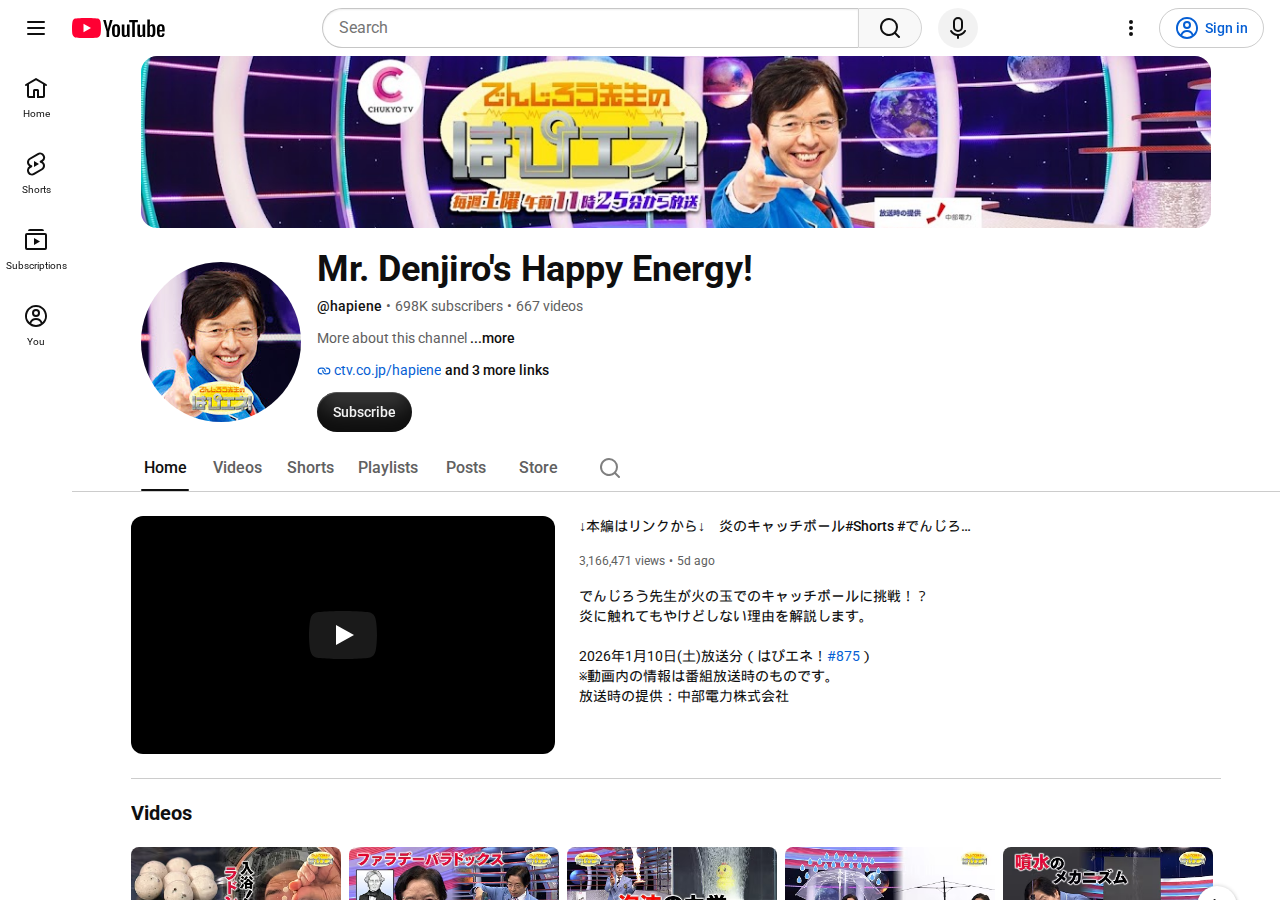
Somewhere around age five or six, the questions start coming fast. Why do typhoons spin? Where do mirages come from? How does that self-service pump at the gas station actually work? None of these have a quick answer, and if you look them up online, you often end up in a pile of "experiment videos" from who knows where. If you want a few minutes of real explanation, made by an actual TV show, でんじろう先生のはぴエネ!【公式】 (Denjiro-sensei's Happy Energy! [Official]) is well worth getting to know.
This is the official YouTube channel for はぴエネ!, a show on 中京テレビ (Chukyo TV) hosted by Denjiro-sensei. Each episode runs about three minutes and answers a single everyday 「なぜ?」, or "Why?" For parents who want screen time to feed curiosity (including me, a dad of twins), it's a great place to start with kids' science videos, as long as you're willing to spend a little time picking them one at a time.
- Official channel: youtube.com/@hapiene (about 698,000 subscribers and 667 videos as of October 2026)
- Latest upload (October 9, 2026): "入浴!ラドンボール/ Bath Time! Radon Balls"
What is はぴエネ!?
はぴエネ! is a TV show on Chukyo TV, and this is the show's official YouTube channel. The host, Denjiro-sensei (Denjiro Yonemura), is a well-known science teacher in Japan. On the show, he runs the experiments himself in the studio and explains the science as he goes. Most topics come straight from everyday life: weather, light, machines, and all the things grown-ups stopped noticing long ago but kids still find amazing.
The format hardly changes. Each episode is about three minutes (the ones we spot-checked were exactly 180 seconds), and each one tackles one question, then wraps up. Because it's made for TV, the editing and pacing are clean. It doesn't rely on loud sound effects or rapid flashing cuts to hold attention. That's a big difference from all the channels that hook kids with toy unboxings or sensational editing.
The channel has 667 videos so far and was still uploading as of October 2026. Lots of videos is a good thing, but it also means the topics are all over the place: a gentle weather explainer might sit right next to a video about ancient weapons, or one with a title that sounds a bit scary. So this is a channel for picking and choosing, not for approving wholesale.
Age note: The channel description doesn't list an age range. My own take is that it works best for about ages 5 to 8 (roughly kindergarten through the early elementary grades). Preschoolers can watch too, but ideally with a grown-up sitting with them.
Why parents love it
1. One "why" per episode
Three minutes, one question: kids can get through it, and they're more likely to remember it. The length is easy to fit into the day. One video during a break after homework, or while you're waiting for dinner, is just right, and you don't end up parked in front of the screen for an hour.
2. A real teacher doing real demos, not random experiment clips
Denjiro-sensei actually works the equipment on camera, then walks through the science step by step: how a typhoon is put together, the optics behind a mirage, how a self-service gas pump works. There's a proper TV production team behind it, which puts it in a different league from the anonymous "science experiment" videos floating around online.
3. Clean pacing, no sensory overload
The TV format keeps things steady, and it's always clear what you're supposed to be looking at. Kids are pulled along by "what's going to happen next?", not pushed along by sound effects and special effects.
4. It connects everyday questions to school science
Typhoons, mirages, gas stations: these are things kids really run into. For first through third graders, the topics line up nicely with what they learn in science class about weather, light and everyday physics, and they make a great after-school "why time."
My take as a twin dad
My approach to science channels like this is simple: one video at a time, and it should give us something to talk about afterward. The nice thing about はぴエネ! is that every episode is short and specific enough to answer whatever a child is curious about right now, instead of running in the background.
My advice is to follow your child's questions. If they ask about typhoons, start by adding 台風のしくみ (How Typhoons Work). If machines are their thing, try セルフ給油機の仕組み (How Self-Service Gas Pumps Work) the following week. There's no need to add a bunch of videos on day one. Giving one video time to sink in and get talked about usually works better than watching a lot at once.
I'll be honest, too: this isn't a channel you can hand over and let kids explore on their own. There's a lot of great stuff, but the topics range widely, and some titles are ones even a grown-up would want to preview first. So I think of it as "science shorts a parent picked," not "a channel kids scroll through by themselves."
The catch: great show ≠ safe YouTube
Even an official TV channel runs into the same problems once it's on YouTube: suggested videos in the sidebar, autoplay, and the comments section. Your child finishes a gentle typhoon explainer, and the next thing YouTube recommends might be a weapons video or a fire experiment you never meant for them to see.
That's the gap FamilyTube is built for:
Kids only watch parent-approved YouTube videos.
No recommendation feed. No endless scrolling. No surprise next video.
You keep Denjiro-sensei's science explainers. You drop the algorithm.
Where to start: your first week
Step 1 — Start with a question your child is already asking
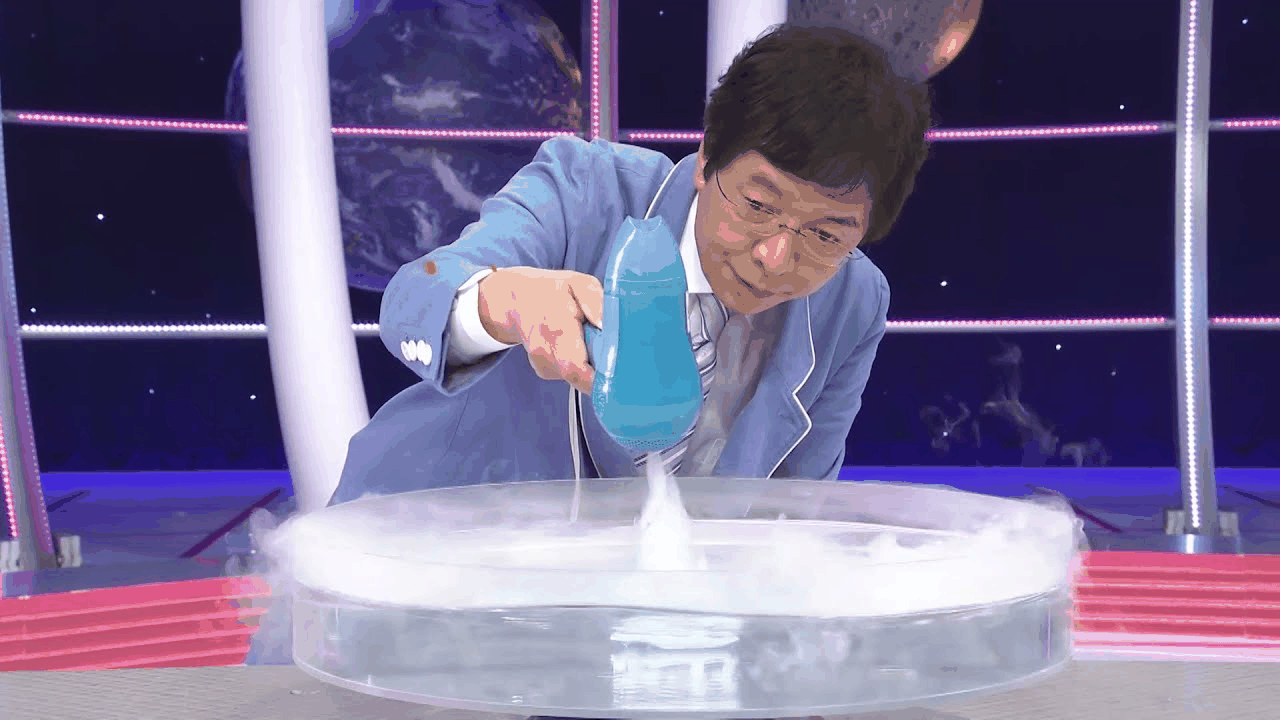
Don't bother browsing the whole channel yet. Start with something your child has actually been curious about lately. If it happens to be typhoon season, 台風のしくみ (posted August 28, 2021, with about 2.41 million views) is a natural first pick. Afterward, you can look at a typhoon track map on the news together and ask what the teacher did in the video.
Step 2 — Branch out to light and everyday machines
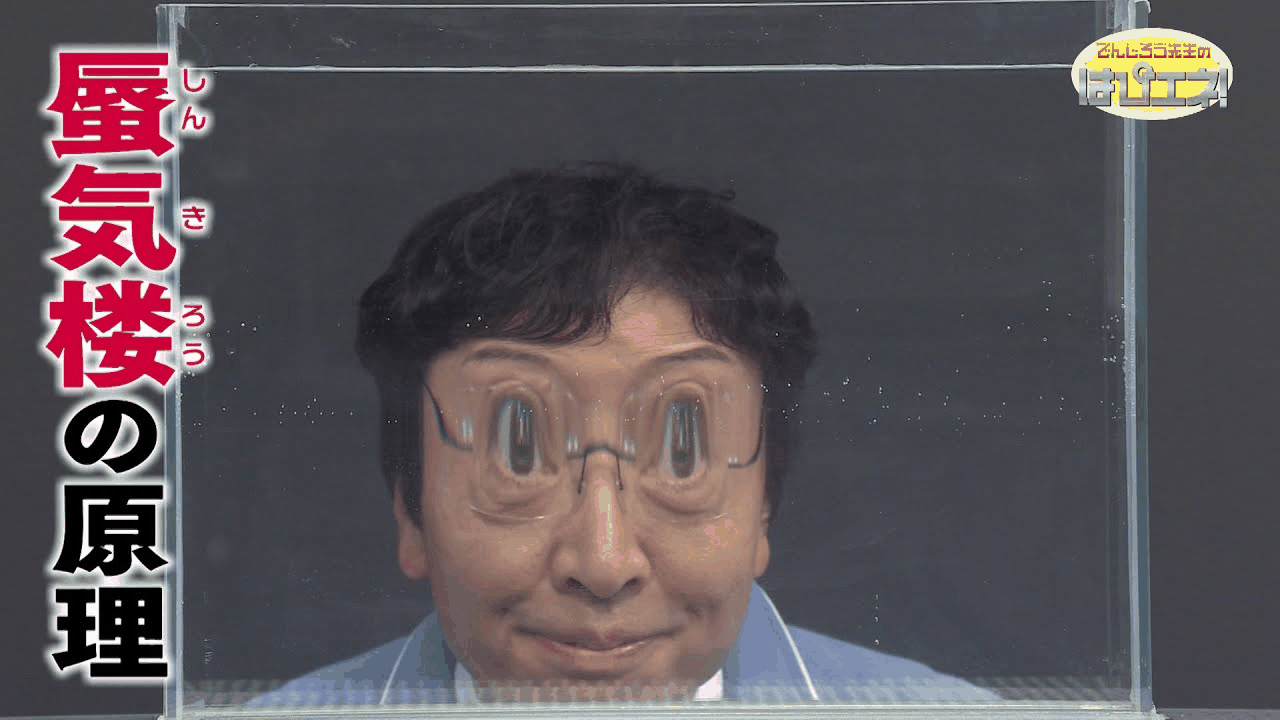
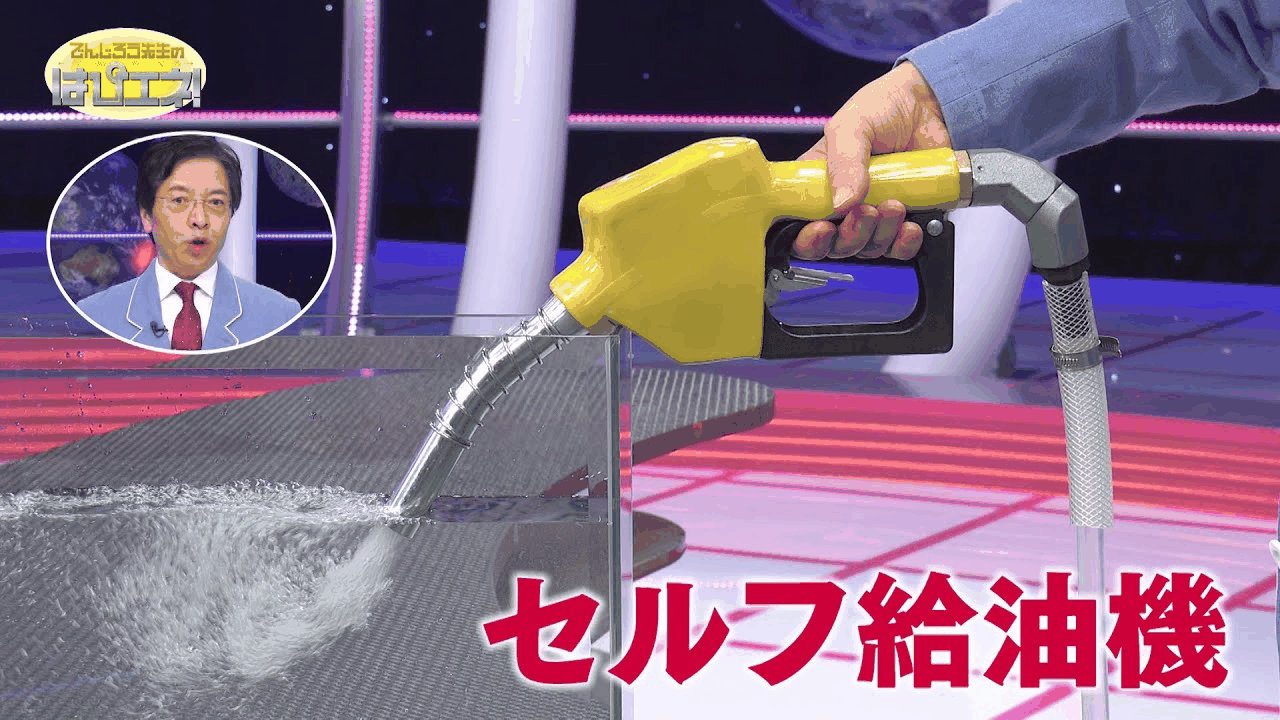
Once the first one goes well, try a new direction. 蜃気楼の原理 (How Mirages Work; posted September 9, 2023, with about 2.32 million views) is about mirages, so it falls under light. セルフ給油機の仕組み (posted April 8, 2023, with about 9.8 million views) explains self-service gas pumps. It's great for kids who love machines and figuring out how things work, and it's the most-viewed of these three. Add just one at a time, and wait a few days before adding the next.
Step 3 — Be picky about weapon and experiment titles
Some of the channel's popular videos have more intense topics or deal with weapons, like 「死者の叫び声 デスホイッスル」 (Scream of the Dead: The Death Whistle), 「古代の武器 アトラトル」 (Ancient Weapons: The Atlatl), 「古代の武器 ボーラ」 (Ancient Weapons: The Bola) and 「ネジと火縄銃」 (Screws and the Matchlock Gun). I'd skip these at first and decide after you've previewed them yourself. If your child is on the sensitive side, it's perfectly fine to leave them out altogether.
The other thing to watch is the experiments themselves. They're demonstrations done by a teacher in a studio, and some use dry ice, hot water or fire. Before you watch, agree with your child that these experiments are for watching only, not for trying at home. Preschoolers especially need a grown-up nearby to remind them.
Step 4 — Two minutes of chat afterward
A three-minute video plus a two-minute chat is just right. Ask "What did the teacher just do?" or "Why do you think that happened?" Or bring the video back up the next time you pass a gas station or catch the weather forecast. It doesn't need to be a full lesson; a casual chat is plenty. The point is connecting the video back to real life.
How to watch はぴエネ! safely in FamilyTube
-
Open FamilyTube on your iPhone or iPad and go to the Parent Area.
-
There are two ways to find the channel. The first is to tap Recommend at the bottom of the screen and choose Science from the channel categories. You'll see でんじろう先生のはぴエネ!【公式】 in the list.
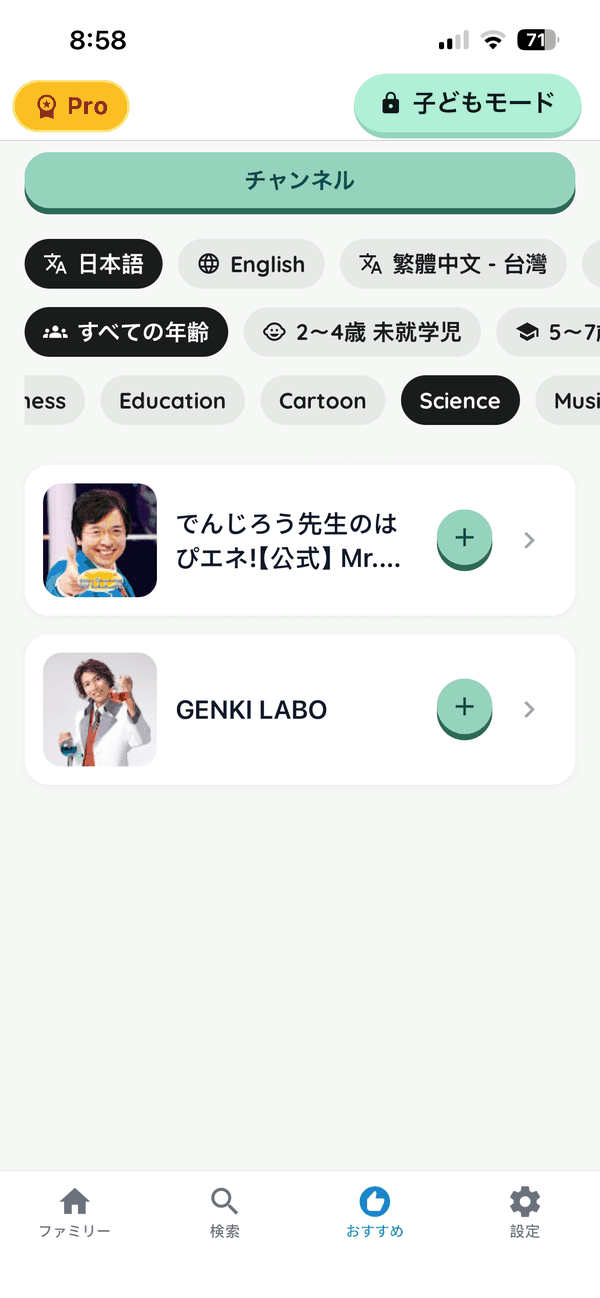
The channel list on FamilyTube's Recommend tab, filtered to Science, showing でんじろう先生のはぴエネ!【公式】. The app UI shown here is in Japanese. If the channel you want isn't in Recommend, tap Search at the bottom, switch to the Search channels tab, and type the channel name, はぴエネ.
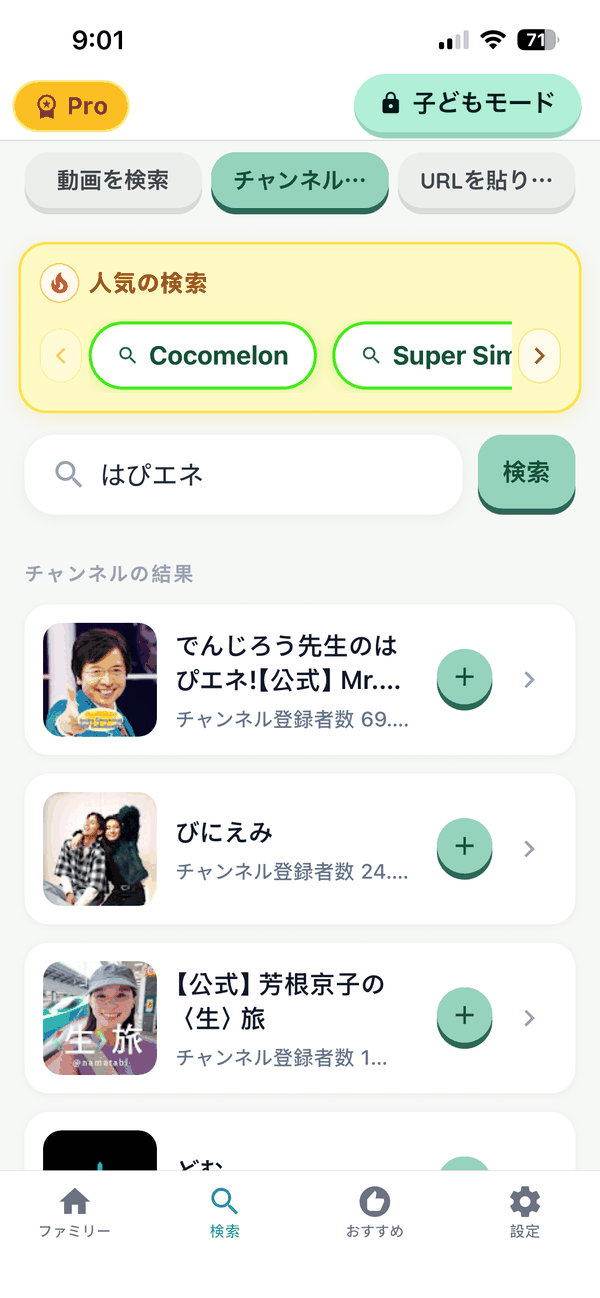
Search channels results for はぴエネ on FamilyTube's Search tab. The app UI shown here is in Japanese. -
Once you open the channel, you can see every video on the Videos tab, or switch to Playlists to browse by topic. はぴエネ!'s playlists are very specific, like 【地球と宇宙】 (Earth and Space), 【音楽の科学】 (The Science of Music) and 【科学マジック】 (Science Magic), which makes finding things much easier than scrolling through 667 videos one by one.
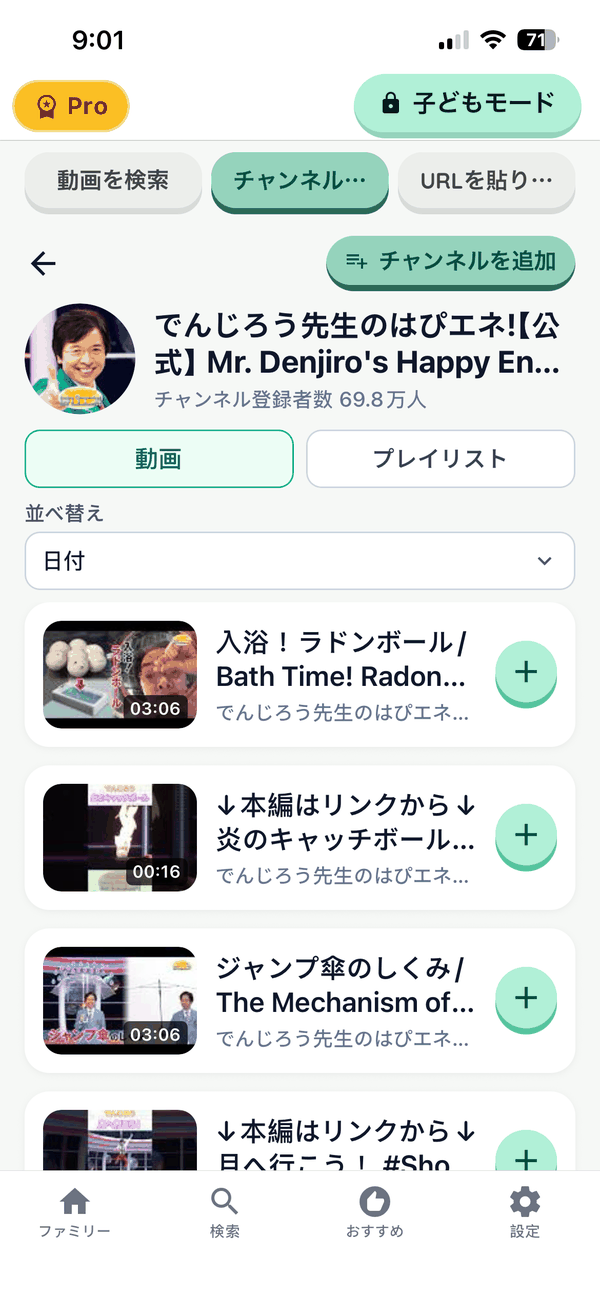
The はぴエネ! channel page in FamilyTube, where you can switch between Videos and Playlists. The app UI shown here is in Japanese. -
Open a playlist and check the videos you want. For example, check 台風のしくみ in 【地球と宇宙】. Start with just one and add more over time.
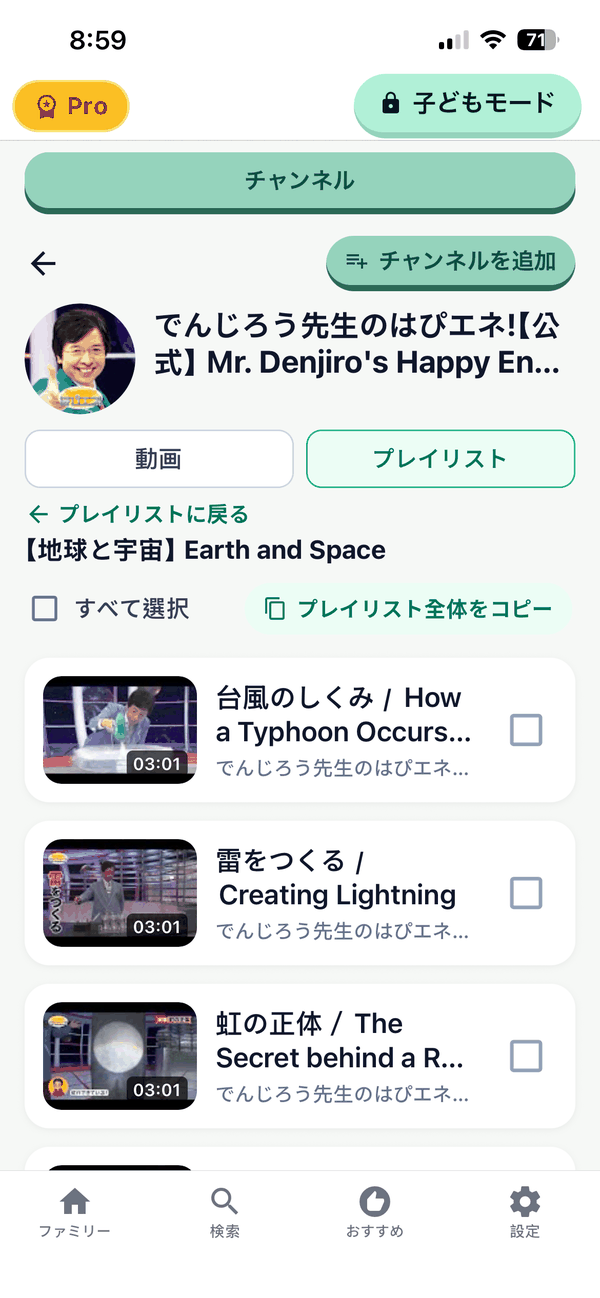
Checking 台風のしくみ in the 【地球と宇宙】 playlist. The app UI shown here is in Japanese. -
Turn on Child Mode and hand over the device: your child can only tap videos you approved.
Result: your child gets to enjoy Denjiro-sensei's science demos, and every video they see is one you picked.
Download FamilyTube on the App Store
Search the App Store for FamilyTube.
Quick FAQ
Is はぴエネ! free on YouTube?
Videos on the official channel are generally free to watch, though availability may vary by region.
Can preschoolers watch on their own?
I wouldn't recommend it. Even gentle topics can involve equipment or materials kids shouldn't try to handle themselves. Preschoolers are best off watching with a grown-up, with a clear rule up front that the experiments are for watching, not doing.
Can I add the whole channel at once?
I wouldn't. The channel has 667 videos on a wide range of topics, including weapons and some more intense demos. Picking videos one at a time and keeping your approved list short will give you a lot more peace of mind than adding everything at once.
*What does "Audio in EN / DE / FR / PT / ES" in some titles mean?
Some video titles list these languages, which may mean there are audio tracks in other languages you can switch to. We haven't tested this ourselves, so check it in the YouTube player.
Does FamilyTube replace YouTube?
No. FamilyTube plays the YouTube videos you choose. It just keeps YouTube's recommendations and that never-ending "next video" off your child's side of the screen.
Bottom line
でんじろう先生のはぴエネ!【公式】 is a rare find among kids' science shorts: a real Chukyo TV show, with Denjiro-sensei doing the demos himself, about three minutes an episode and just one "why" each time. It asks a little more of parents when it comes to picking videos, but pick well and it makes a wonderful after-school science break.
Start with these three: 台風のしくみ, 蜃気楼の原理 and セルフ給油機の仕組み. Keep your approved list short, and watch in FamilyTube so a perfectly good typhoon explainer doesn't get carried off somewhere else by YouTube's recommendations.
To get kids moving, check out our ケロポンズ&プッピーズ (Keropons & Puppies) guide. For gentle kids' songs, see the Super Simple 日本語 (Super Simple Japanese) guide and the ボンボンアカデミー (Bom Bom Academy) guide. For numbers, there's the セサミストリート日本公式 (Sesame Street Japan Official) guide, and for everyday habits, the しまじろうチャンネル (Shimajiro Channel) guide. You can also browse all channel guides for more picks parents can trust.